
Let’s start with something you probably didn’t expect: an hour on the massage table is not a workout, and it was never meant to be. What it is, is an hour where nothing is asked of you. You lie still, someone works slowly through your shoulders and back, and the only thing you have to do is breathe.
So let’s be straight about it. A massage will not change the number on your scale, and anyone who tells you otherwise is selling something. What a good session does is smaller and much more immediate: warm oil, steady pressure, a room kept quiet, and a therapist who slows down where you are tight and moves on where you are not. Sessions are intended for relaxation and comfort only, and are not a treatment for any medical condition.
Here’s what the hour actually looks like.

The Big Picture: An Hour Set Aside
Before we go any further, let’s shift the perspective slightly.
Most people book a massage at the end of a long stretch—a heavy few weeks at work, a run of bad nights, a body that has been carried around rather than lived in. What they are after is not a result. It is an hour of being still.
So rather than asking, “What will this do for me?”—maybe the better question is: “What does the hour itself actually feel like?”
That one is much easier to answer.
What Sixty Minutes on the Table Is Actually Like
Let’s get this out of the way: lying down for 60 minutes while someone else works on your muscles is not exercise. It is the opposite of exercise. The table is warm, the room is dim, and the pressure builds slowly—broad, flat strokes across the whole back first, then slower work along the shoulder blades and the sides of the neck.
And that is not nothing. Most people go quiet about ten minutes in. Some fall asleep. Whatever you walked in carrying, you tend to put it down for the length of the hour.
Read Also: How Cellulite Affects Self-Confidence and Emotional Well-Being
Pressure and Pace: The Two Things That Matter
A session is built around pressure and pace. Both are adjustable, and both are yours to set.
Say at the start whether you like firm work or something lighter, and say so again halfway through if you change your mind. Pressure that feels right across the shoulders is often far too much at the lower back, and there is no prize for putting up with an hour you are not enjoying.
Pace matters just as much. A single unhurried pass down the length of the back can take a full minute. That slow rhythm is what makes sixty minutes feel long in the good way. You probably won’t think about it while it is happening, but it is most of what you remember afterwards.
The Lightest Work on the Menu
Lymphatic drainage is the gentlest session we offer, and it surprises people. There is almost no pressure to it—more a slow, repeated sweeping of the skin than anything you would normally call a massage.
If you have only ever had firm work, the first few minutes can feel like nothing at all. Then the rhythm takes over. It is repetitive, unhurried and very quiet, and a lot of people end up finding it the most settling hour on the list.
It is not a detox and it is not a treatment. If you have a diagnosed medical condition, or you are recovering from surgery or illness, please talk to your doctor before booking a session.
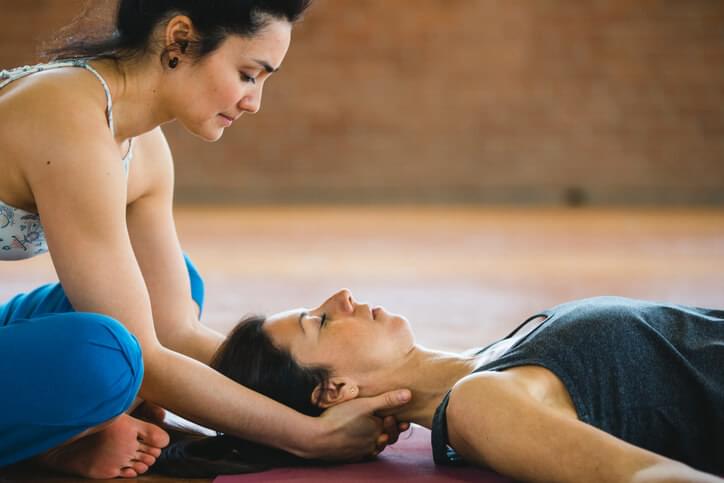
The Part That Is Simply About Being Looked After
Here’s where it gets personal.
Have you ever got to ten at night and realised you were still braced—shoulders up, jaw set, nothing actually wrong? We all have. Some weeks just end that way, and there is no clever fix for it.
An hour on the table does not solve the week. What it does is interrupt it. The phone is in another room, the lights are low, and for sixty minutes nobody needs anything from you at all.
That is the whole of it, and it is worth more than it sounds. People get off the table more slowly than they got on. They talk more quietly. They take the stairs at a gentler pace. It doesn’t last forever, but it is real while it lasts.
Read more: Acupuncture: What a Session Is Actually Like
Book the Late Slot
Here is a small piece of genuinely practical advice: book late if you can.
We run daily from 09:00 to 03:00, which means the late slots are real ones rather than theoretical. There is a particular pleasure in finishing a session at eleven at night and having absolutely nowhere to be afterwards.
Because the therapist comes to you, there is no getting dressed, no drive across town, no re-entering the world at the end of it. They pack up the table; you stay where you are.
Now imagine that as a standing appointment. It stops being the thing you keep meaning to get round to, and becomes the part of the week you plan around.
After Training
Here’s something people don’t always realize: the day after a hard session is when a massage is most welcome, not the day of.
When you are stiff and sore, everything feels like more effort than it is. Getting off the sofa becomes a decision rather than a movement.
A post-training session is firmer and more focused than a relaxation massage: longer strokes through the big muscle groups, slower work at the calves, hamstrings and shoulders, and a fair amount of the therapist asking where it feels tight and adjusting accordingly. It is not medical care, and it is not a substitute for it.
It is not treatment. It is an hour that feels very good at the end of a heavy training week.
Check out: Massage at Home
Can Massage Replace Exercise?
Let’s not pretend here. No, massage isn’t a replacement for physical activity. You still need movement to build strength, keep your heart healthy, and improve endurance.
But it is a good hour to give yourself at the end of a heavy week, and a pleasant one to look forward to in the middle of it.
Think of it as the reward rather than the training.
An Hour in Your Own Body
It’s worth saying this out loud: a lot of us spend the whole day from the neck up. Screens, meetings, a commute, and then more screens.
An hour in which the only thing happening is touch, warmth and slow pressure is genuinely unusual, and that is most of the appeal. It puts you back in your body for a while—in a good way.
You notice the weight of your own arms. You notice you have been holding your shoulders somewhere near your ears since Tuesday. You breathe out properly. None of it is dramatic, and none of it needs to be.
Okay, But What Makes a Massage a Good One?
The quality of your massage matters. A lot.
A good massage doesn’t mean champagne in the waiting room (although, hey, no complaints). It means the therapist asks what you want before they start, checks in halfway through, and actually changes the pressure when you say it is too much.
It also means the hour isn’t a script. You don’t get the same routine as the last five clients. One session might be firm across the shoulders and light everywhere else; the next might be slow, even pressure from start to finish—depending entirely on what you ask for that day.
That attention is the whole difference between an hour you remember and an hour you don’t. You are not just lying there getting oiled up—you are being paid attention to.
Who Tends to Book
To be clear, this is not medicine and we make no claims about it. People tend to book a session when:
- They have had a long, tightly packed few weeks
- They have been sleeping badly and want an hour of quiet
- They want something for themselves that isn’t a screen
- They have been training hard and feel stiff
- They want an hour in their own body, unhurried and unjudged
And plenty of people book for no reason at all beyond wanting the hour, which is reason enough.
Book Today: Hotel Massage
The Bottom Line: Treat Yourself and Your Body
Let’s be honest. We live in a world where wellness routines can feel more like chores—count your steps, log your meals, track your macros. Sometimes you need something that feels good and does good.
Massage might just be that thing.
It’s an hour built around very few things: warm oil, steady hands, a quiet room, and the deeply human wish to be looked after for a while. That is all it is, and all it needs to be.
So if you’re stiff, tired, or you just want the hour… book the massage. Sessions are intended for relaxation and comfort only, and are not a treatment for any medical condition. If you have a diagnosed medical condition, or you are recovering from surgery or illness, please talk to your doctor before booking a session.