
Sports Massage in Athens
Firm, targeted work on the muscle groups your sport actually uses, at your home or hotel
Train Hard, Recover Smarter
Sports massage is firmer, faster and far more targeted than a relaxation session. The strokes follow the direction of the muscle fibres, there is usually some assisted stretching in it, and the therapist spends the hour on a short list of areas rather than moving over the whole body.
It often involves deeper, slower work than other types of massage—but it’s not just about pressure. It’s about precision. Your therapist targets specific muscle groups, fascia, and connective tissue based on your activity and needs.
Not sure whether you need sports or deep tissue massage? We explain the difference between deep tissue and sports massage, and what a post-workout massage hour is actually like. Διαβάστε στα ελληνικά για το αθλητικό μασάζ.
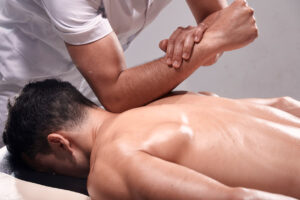
What to Expect During a Session
Expect focus. Sports massage tends to be more targeted than general relaxation massage. Your therapist will ask what areas need work, what your training looks like, and how your body feels today—not just in general, but right now.
From there, they’ll build a session around your unique needs—whether that means loosening tight hamstrings, working on shoulder mobility, or helping your back release after long workdays.
It might feel intense at moments—but it should never feel unsafe or overwhelming. Communication is key.
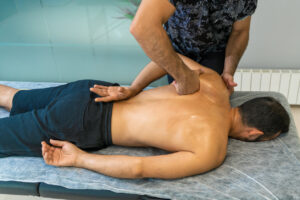
Sports Massage at Home in Athens
Sports massage sessions run 60, 90 or 120 minutes at €70, €90 and €120, daily from 09:00 to 03:00, anywhere in Athens and Attica. The therapist brings the table, fresh linens and oil, so you can book it on a rest day or after a late training session and stay at home afterwards. See how the home massage service in Athens works.
For Athletes and Non-Athletes Alike
You don’t need to be a professional athlete to benefit from sports massage. You just need a body that moves. Or pushes itself. Or maybe one that’s a little sore from doing too much, too often, without enough downtime.
Whether you’re a runner, a weekend warrior, a weightlifter, or someone who just wants to feel less tight, sports massage gives you an hour spent on the legs, back and shoulders that take the load.
Who Is It For?
This part surprises people: sports massage isn’t just for athletes. It’s for anyone with an active or physically demanding lifestyle.
Common clients include:
Runners, swimmers, cyclists
CrossFit and gym enthusiasts
Dancers and martial artists
Construction or manual labor workers
People with repetitive strain from desk jobs or poor posture
Weekend hikers or those training for an event
If your week involves training, standing or lifting, this is the session built around exactly that.
Frequently Asked Questions
Yes, please do, and at the start rather than halfway through. Your therapist will work around anything sore or recently injured and keep the pressure lighter over those areas. If something is painful rather than simply tight, see a doctor or physiotherapist first — this is a wellness service, not a medical one.
Most clients book it on a rest day or an easy day, rather than the night before a race or a heavy session. Some train again the next morning; others prefer another day off, especially after deeper work. Tell your therapist what is in your training week and they will keep the pressure in line with it.
Absolutely. You can blend it with Swedish, relaxation, or even aromatherapy massage, depending on how you’re feeling. Some clients prefer starting with sports massage and ending with a calming finish. Just let your therapist know your preferences.
The same as every other session we offer: €70 for 60 minutes, €90 for 90 minutes and €120 for 120 minutes, at your home, hotel or Airbnb anywhere in Athens and Attica. Longer sessions leave time to work more than one area properly.
Yes. We work daily from 09:00 to 03:00, so a session after evening training or a late match is an ordinary booking. See late night massage for how evening sessions work.