
Introduction: Why the Type of Massage Matters
Life doesn’t slow down. We juggle work, relationships, workouts, responsibilities—and somewhere in the chaos, our bodies start to protest. That’s where a massage comes in—not as a solution to any of it, but as an hour in which none of it is your problem.
For some, it’s the end of a long week. For others, it’s the morning after a hard training session. Whatever the reason, there’s probably a style that suits. But with so many options—Swedish, lymphatic, hot stone, aromatherapy—how do you know which one is right for you?
Two of the most commonly requested techniques are deep tissue massage and sports massage. They’re often grouped together, and yes, they do overlap. But they also serve very different purposes. If you’ve ever wondered which one you should choose—or why people talk about them like they’re interchangeable but aren’t—this guide breaks it down.
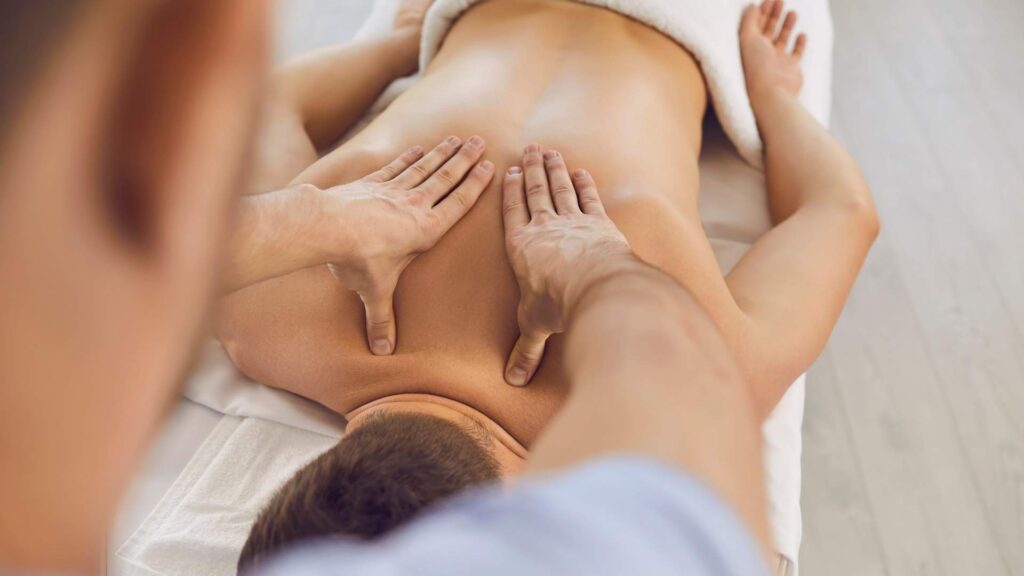
Deep Tissue Massage: Going Beyond Relaxation
Let’s start with deep tissue massage. Despite the name, it’s not just about pressure for pressure’s sake. Yes, it goes deep. But more importantly, it’s intentional.
Deep tissue means slow, deliberate strokes and firm pressure, worked with the thumbs, the elbow and the forearm rather than the fingertips. The therapist stays in one small area for a long time instead of covering ground. That is very nearly the whole definition.
This is the one people usually ask for when:
- They want considerably more pressure than a standard massage
- They sit at a desk all day and feel it across the shoulders
- They have had a light massage before and found it underwhelming
- They want a lot of time in a few places rather than a little everywhere
It isn’t always comfortable, and it isn’t meant to be effortless. But there’s a clear difference between firm and unpleasant, and you are the one who decides where that line sits.
And let’s clear something up—it isn’t about pushing as hard as possible. A good therapist works at the pressure you asked for and checks in as they go. Say so if it’s too much. There’s no prize for gritting your teeth through an hour you aren’t enjoying.
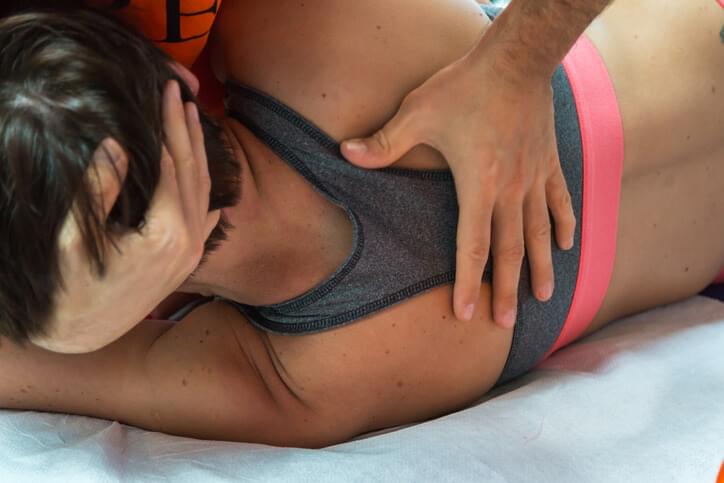
Sports Massage: Tailored for the Active Body
Now, if you’re regularly active—whether you’re a weekend runner, a CrossFit enthusiast, or a full-time athlete—sports massage is probably more in your wheelhouse.
Sports massage is simply a session built around the muscle groups you actually use. It tends to be firmer, faster-paced, and far more focused on the legs than a general massage would be.
What makes it different? It’s targeted. Customized. Often faster-paced. And it’s typically focused on specific muscle groups related to your sport or activity.
A runner usually wants the calves, hamstrings and lower back. A tennis player? Forearms, shoulders, neck. If you have an actual injury, though, that’s a question for your doctor or a physiotherapist, not for us—please talk to them before booking.
Sports massage techniques can include:
- Assisted stretching
- Friction and compression
- Trigger point therapy
- Cross-fiber techniques
Sessions are intended for relaxation and comfort only, and are not a treatment for any medical condition. It is an hour that feels very good at the end of a heavy training week, and that is the whole of the claim.
Deep Tissue vs. Sports Massage: What’s the Real Difference?
At first glance, the two can look quite similar. Both can involve firm pressure. Both can relieve tension. But the intent and application are where they diverge.
Deep Tissue Massage:
- What it is: firm, slow, concentrated work in a few places.
- Approach: thumbs, elbow and forearm; long pauses in one spot.
- Who asks for it: people who want serious pressure, athletes or not.
- What to expect: intense while it’s happening; you may well feel it the next day.
Sports Massage:
- What it is: firm work concentrated on the muscle groups you train.
- Approach: variable pressure, faster movements, often some assisted stretching.
- Who asks for it: runners, gym-goers, and anyone stiff the day after.
- What to expect: more time spent on the legs than in any other session on the menu.
One isn’t better than the other. Think of it this way: deep tissue goes deep in a few places; sports massage goes wide across the muscles you actually use.
Criteria for Choosing the Right Massage
If you’re not sure which massage to go for, consider these questions:
- Where do you want the time spent?
Shoulders and upper back after a week at a desk? Deep tissue. Legs, the morning after a long run? Sports massage. - Firm, or firm and fast?
Deep tissue stays slow from start to finish. Sports massage changes pace a good deal more. - What kind of pressure do you prefer?
While both massages can be intense, deep tissue tends to stay in that firm, slow-pressure zone, whereas sports massage varies depending on your goals and needs. - How much do you move?
If you train regularly or do physical work, sports massage is usually the more enjoyable of the two. - Do you have a known injury or condition?
If you have a diagnosed medical condition, or you are recovering from surgery or illness, please talk to your doctor before booking a session—and mention it to the therapist when you book.
And remember: the therapist matters as much as the style. A good one adjusts as they go, based on what you actually say. They ask before they start. They listen. They don’t run the same routine on everybody.
Final Thoughts: Don’t Settle—Customize
There’s no right answer here. The type to book is whichever one you fancy—today. Some weeks you want the slow, concentrated pressure of a deep tissue session. Other weeks you want something faster and more focused on the legs.
And sometimes? You might benefit from a mix of both. A good therapist will blend techniques, focus on areas of concern, and adjust in real time.
At Massage Heaven, that’s what we aim for. Say what you want when you book, say it again halfway through if you change your mind, and the hour gets built around that. We run daily from 09:00 to 03:00, and the therapist comes to you.
So whether you’ve been at a desk all week or you’re stiff the morning after a race, there’s a session that suits. The only thing that really matters is asking for the one you actually want.