
Cupping Therapy
Glass cups, gentle suction, and a slow half hour on your back and shoulders. A traditional technique, done at your home or hotel.
Where Release Begins
Some tension doesn’t go away with stretching or massage. It lingers. It settles deep in the tissue—tight, full, almost stuck. You know it’s there, but it won’t move. Like your body is holding on… even if you’re ready to let go.
Cupping therapy takes a different approach.
It is a traditional method, practised for centuries in Greece, China and across the Middle East. The technique itself is very simple. Suction cups are placed on the skin, so the tissue is lifted rather than pressed. It is more or less the opposite sensation to an ordinary massage.
It’s not invasive. It’s not aggressive. But it moves things.
What Does a Session Feel Like?
Quiet. Slow. Intentional.
After a quick chat about where you would like the work, your therapist places the cups on your skin, usually on your back, shoulders or thighs. You’ll feel a gentle tug as the air is drawn out. The sensation is like a pulling hug: firm but supportive.
Most people describe it as odd at first, then oddly comforting.
There may be moments of warmth or a light tingling where each cup sits. In some sessions, the therapist might move the cups slowly along tight muscles, creating a deep, massaging glide. Other times, they stay still, allowing your body to soften and release on its own.
You just lie there. Breathe. Let the work happen.
What a Cupping Session Involves
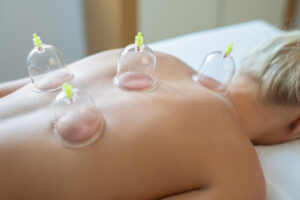
A cupping session usually runs 30 to 45 minutes. You lie face down on the table with a towel over you, and the cups go on your back, shoulders or the backs of your legs. Six to ten cups is typical.
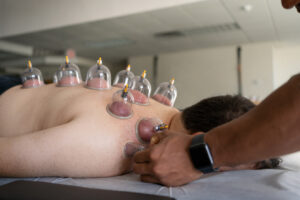
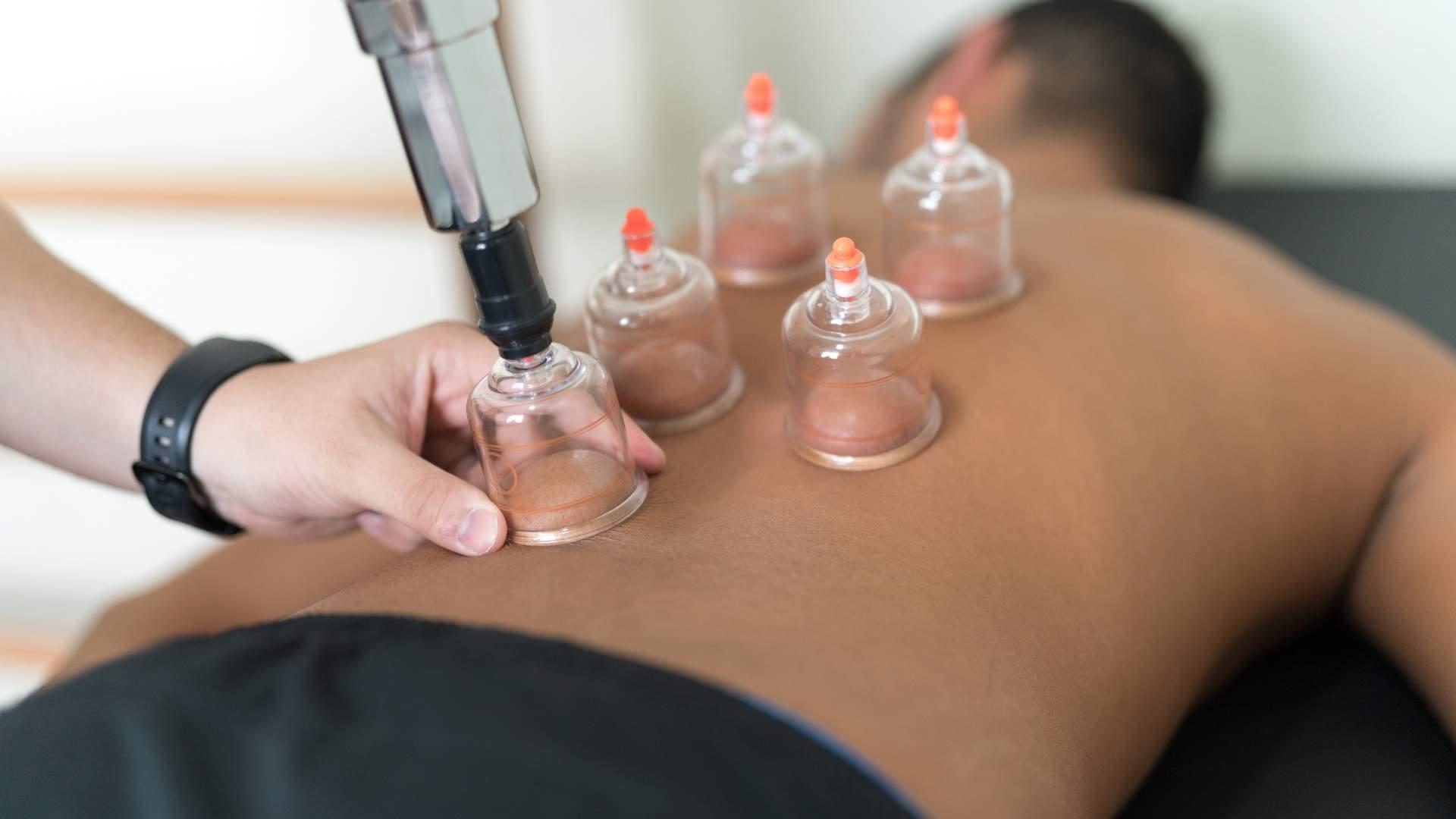
The cups themselves are glass or silicone, warmed slightly first. Your therapist draws out the air, sets each cup down and leaves it in place for a few minutes. Sometimes, instead of leaving them still, the cups are slid slowly along the muscle with a little oil, which feels like a long, dragging glide.
Cupping is a wellness treatment, not a medical one. Sessions are intended for relaxation and comfort only, and are not a treatment for any medical condition. If you have a diagnosed condition, or you are recovering from surgery or illness, please talk to your doctor before booking.
Holistic Approach
Cupping is an old practice with a very simple mechanism: a cup is warmed or pumped, placed on the skin, and the skin rises slightly into it. It stays there while you lie still. That is the whole of it.
What the Pull Feels Like
The pull is steady rather than sharp, and it stays at one level once the cup is set. Most people find the first few seconds strange and then stop noticing it. You lie still for the rest, usually ten to twenty minutes.
Why People Try Cupping
Cupping is often chosen by those who feel:
Stuck in their body—whether emotionally or physically
Sore or tight, especially in the back, shoulders, or legs
Curious about it, having seen the round marks on someone else
Depleted from overtraining or burnout
Sensitive to deep pressure, but still needing deep release
It’s a way of working with the body instead of against it. Lifting, not pressing. Releasing, not forcing.
Frequently Asked Questions
Not typically. You’ll feel a pulling or stretching sensation, which can be strong but not painful. If anything feels like too much, your therapist can reduce the pressure or remove the cup immediately. Most people find it oddly relaxing after the first few seconds.
The suction leaves round marks where the cups sat. They are not bruises and do not usually feel tender. They fade on their own, generally within a few days, and how dark they go varies a lot from person to person. Worth knowing if you have a beach day or a wedding coming up.
As often as you like the feeling of it. Plenty of people book once or twice a month, others just once out of curiosity. The only practical rule is to wait until the marks have faded before booking again. Beyond that there is no schedule, and nothing to sign up to.