
Let’s be honest—cellulite might look like a purely physical thing on the surface, but for many, it digs a bit deeper. It’s not just about how the skin looks; it’s how people feel about how it looks. That quiet discomfort when wearing shorts, the hesitation to book a beach holiday… It adds up.
For some, cellulite can chip away at self-confidence. It’s frustrating, even discouraging. And sometimes, it leads to self-consciousness or pulling back socially—not because others are judging, but because we think they might be. That said, it’s worth remembering something: self-esteem isn’t built on appearance alone. It’s broader than that. Complex, even.
So the goal isn’t to erase anything. Cellulite is normal, extremely common, and no massage changes it. What an hour on the table offers is something much smaller and much more pleasant: time spent being comfortable in your own body rather than appraising it. That’s where we come in.
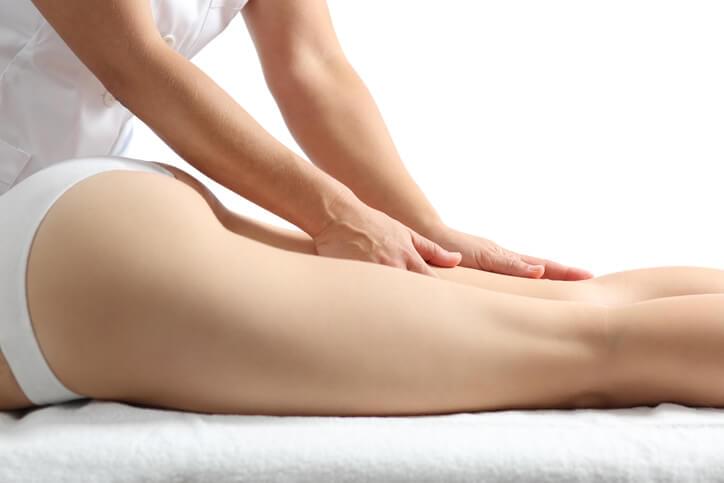
Will a Massage Get Rid of Cellulite?
Short answer? No. And anyone who tells you otherwise is selling something.
Massage isn’t magic, and we’re not going to pretend it is. What an hour actually gives you is warm oil, long slow strokes along the legs and hips, and sixty minutes in which nobody is looking at you or asking anything of you.
A good therapist works at the pressure you ask for, spends longer wherever you want the attention, and leaves you warm and unhurried at the end of it. Sessions are intended for relaxation and comfort only, and are not a treatment for any medical or cosmetic condition.
The Styles People Ask For
There’s no one-size-fits-all, but a few styles come up again and again:
- Lymphatic drainage massage: the lightest thing on the menu—slow, repeated sweeping strokes with almost no pressure behind them. Very quiet, very unhurried.
- Deep tissue massage: a good deal firmer, worked slowly with the forearm and the heel of the hand. Say if it’s too much—it should never be something you grit your teeth through.
- Cupping: yes, the kind that leaves temporary round marks for a few days. It is a pulling sensation rather than pressure, which people either love or don’t.
- Device-assisted massage: rollers and similar tools, used alongside the hands rather than instead of them.
Some therapists also use essential oils or warming balms—mostly because they smell good and stop the skin dragging. The important thing is that you get the pressure and the pace you actually asked for.
Why Choose a Professional?
Technique matters. Pace matters. And above all, listening matters.
An experienced therapist adjusts to your skin and your sensitivity as they go, rather than running a fixed routine from memory. That is the whole difference between an hour that suits you and an hour that doesn’t.
At Massage Heaven, therapists ask before they start and check in as they go. They also understand that for a lot of people this is a slightly self-conscious booking to make, and they don’t make it a thing.
Learn more: Lymphatic Drainage Massage
What Else the Hour Gives You
Something starts the moment the appointment goes in the diary.
It is an hour blocked out that nothing else can take. The phone goes in another room, the lights go down, and for sixty minutes there is nowhere else to be and nothing to answer. That, more than anything, is what people are actually booking.
You won’t walk out looking any different. You will most likely walk out slower, warmer and in no particular hurry—which is a decent trade for an hour.
Final Thought: It’s Not Just About the Surface
You don’t have to be at war with your body. Cellulite is normal and almost everybody has it. And if you have a diagnosed medical condition, or you are recovering from surgery or illness, please talk to your doctor before booking a session.
Otherwise: try one session. Book it late if you like—we run daily from 09:00 to 03:00—and see how the hour goes.
Because caring for yourself isn’t vanity. It’s agency.