
It’s easy to think of massage as a luxury—something you book on holiday or after a particularly exhausting week. “Therapeutic massage” sounds like something else again: more serious, more clinical, closer to treatment. So it’s worth being straight about what the phrase does and doesn’t mean.
For a home massage in Athens, reach out to our team today.
In practice it describes a style of session, not a medical service. It usually means firmer, slower and more focused work than a straight relaxation massage: more time spent in fewer places, more checking in about pressure, and a proper conversation at the start about where you want the hour to go. Sessions are intended for relaxation and comfort only, and are not a treatment for any medical condition. If you have a diagnosed medical condition, or you are recovering from surgery or illness, please talk to your doctor before booking a session.
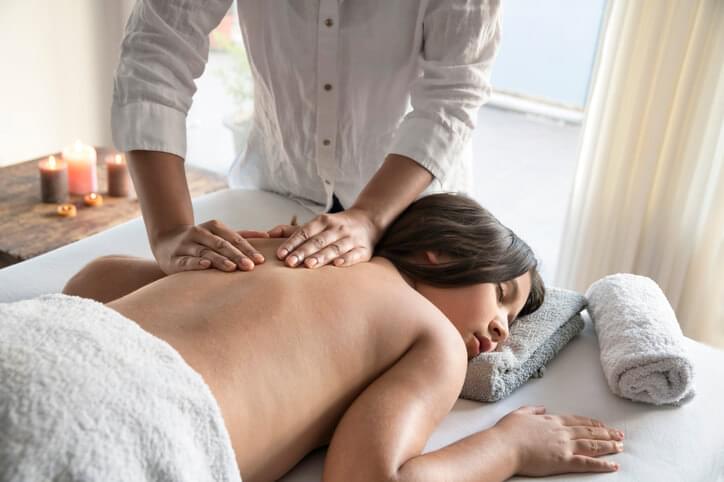
When Is Therapeutic Massage Worth Considering?
We live in a culture that glorifies hustle. Push harder. Sleep less. Keep moving. And for many of us, our bodies quietly absorb the cost of that mindset—until they can’t anymore.
If you’ve ever got to ten at night and realised you were still braced—shoulders up, jaw set, nothing actually wrong—you’re not alone. An hour on the table doesn’t solve the week, and it doesn’t claim to. What it does is interrupt it: the phone in another room, the lights low, and sixty minutes in which nobody needs anything from you at all.
What the Session Actually Involves
It varies. Some of it is gentle and rhythmic—long gliding strokes with the flat of the hand across the whole back. Some of it is a good deal firmer, worked slowly with the forearm and the heel of the hand in one small area at a time. Some therapists include assisted stretching; say at the start if you would rather they didn’t.
The useful part is that none of it is a script. A good therapist asks before they start, checks in halfway through, and actually changes the pressure when you say it’s too much. That is the whole difference between an hour you enjoy and an hour you put up with.
What You Actually Get
We’re not going to list health benefits, because we can’t stand behind them. What we can describe is the hour itself: warm oil, a room kept quiet, pressure that builds slowly rather than arriving all at once, and a therapist who spends longer wherever you ask them to. Most people go quiet about ten minutes in. Some fall asleep. That’s roughly the whole of it, and it’s the part that’s true.
It is not a cure for anything, and it is not a substitute for medical care. It is an hour that feels very good at the end of a long stretch—a smaller claim, and one we can actually make.
Who Should Try It?
Honestly? Anyone who likes the sound of it. Busy professionals at the end of a long week, new parents who have been carrying a baby on the same hip since March, older clients who simply want firm, unhurried work across the shoulders.
A massage is not a treatment for depression, anxiety or grief, and we would rather say so plainly than hint otherwise. If you are struggling, please talk to your doctor. What the hour offers is much smaller and much simpler: warmth, quiet, and being paid attention to for a while.
Why Choose a Professional?
You wouldn’t let just anyone cut your hair. Experience matters here for much the same reason: an experienced therapist adjusts as they go rather than running a fixed routine from memory. That’s what we aim for at Massage Heaven. They ask what you want before they start, they check in as they go, and they don’t fill the hour with talking.
So if what you want is an hour of firm, focused, unhurried work at the end of a long stretch, that is exactly what this is. We run daily from 09:00 to 03:00, and the therapist comes to you.